

Have you ever thought about how a country builds its wealth? GDP growth is like a progress report that shows us more goods and services are being made. This means more jobs and a better way to support families.
When the GDP rises, it usually opens up new opportunities and brings in extra funds for everyday needs, making the economy feel a lot safer. Simply put, a higher GDP is key to boosting a country's prosperity and setting a solid foundation for the future.
Why GDP Growth Matters for National Prosperity
GDP growth means that a country is making more goods and services now than it did before. In other words, it shows when businesses and industries are growing. This rise in production hints at improvements in a nation’s ability to work and create wealth. GDP is like a big report card, it sums up both how much is produced and how much money people earn across the country. For example, before many countries became economic powerhouses, their production numbers were much lower. Back then, these figures marked the early stages of development.
GDP also offers a peek into a nation’s economic strength. A big GDP is often seen as a sign of a strong and influential country around the world. It pulls information from many areas of the economy, giving leaders and experts a broad picture of how the country is doing financially. This number is important when looking at the global economy because it connects what happens inside the country with the larger world market, making sure local efforts boost national power and security.
The connection between GDP growth and a healthy economy is clear. When production increases, more jobs are created, people spend more, and the government gets more funds to support schools, roads, and other services. Every rise in GDP is more than just a number, it shows real progress towards a nation that is both strong and resilient, helping improve everyday life for its citizens.
Driving Job Creation Through GDP Growth

When the economy grows, many companies choose to expand and hire more people. A higher GDP often means more jobs in developed countries, as businesses ramp up production and add extra staff. This clear link between more output and job creation helps lower unemployment and builds confidence among buyers.
Here are some ways this happens:
- Firms boost production
- Companies invest more in hiring
- Increased consumer demand leads to more job opportunities
As companies grow, they boost production and invest in more labor, which in turn creates additional employment opportunities. This cycle of hiring fuels even more business activity, strengthening the overall economy. More jobs mean that people have more money to spend, further increasing production. The job market often reacts quickly to these changes, so even a small rise in GDP can lead to noticeable improvements in employment. In short, rising production, enhanced labor demand, and growing consumer confidence work together to support steady economic growth and stability over time.
Boosting Consumer Spending and Living Standards with GDP Growth
When the economy grows, people start earning more money that lets them buy everyday items and even enjoy a few luxuries. As businesses do well and add more value, workers tend to see higher wages. This extra money means families can now choose better food, nicer clothes, or even swap out old appliances, making daily life a bit richer.
More money in people's pockets tends to boost spending on everything from basic goods to fun outings. This increased spending sends a clear signal: businesses start offering more products and services that improve the quality of life. Stores buzz with activity, service providers grow, and local areas often see better amenities and improvements in community infrastructure. It all creates a cycle where spending leads to improved services, which in turn builds even more confidence among consumers.
A useful measure to understand this trend is per capita GDP. This number divides the total income by the number of people and gives us a simple way to compare how well individuals are doing in different areas.
Enhancing Government Revenues and Public Services through GDP Growth
When the economy grows, it brings in more money for the government. As a nation makes more goods and provides more services, people earn higher wages and businesses see better profits. This means more tax money from what people earn and spend. With that extra cash, governments can pay for important programs like schools, hospitals, and roads that help everyday life.
More money from taxes also helps build better roads, modern hospitals, and improved schools. Think of it like fixing up a playground; these projects improve our daily lives and help set the stage for more growth in the future. It’s a cycle where better infrastructure can lead to even more economic activity.
Governments often use smart money plans to make the most of economic growth. They invest the extra revenue in programs that boost business and create jobs. In this way, strong economic performance today lays the groundwork for a healthier community tomorrow, providing all of us with a safety net and a better quality of life.
Attracting Investment and Managing Business Cycles with GDP Growth
When a country's economy grows steadily, investors definitely take notice. Both local and international funds are drawn to the promise of expansion. They see solid economic numbers as hints that businesses are ready to grow and deliver strong returns. For example, in one nation, even a small bump in GDP led to a big influx of foreign money, sparking improvements in local industries.
How money flows in the market often mirrors the natural business cycles. When investors add capital, companies can boost production, which in turn fuels overall economic activity. It’s like giving a gently rolling wheel that extra push, steady input helps smooth out the highs and lows, making the peaks a bit higher and the dips less deep.
Consistent GDP growth builds real strength over time. When an economy shows steady progress, it boosts investor confidence, even when times get tough. That kind of stability builds trust and encourages careful planning for long-lasting, balanced expansion.
Measuring GDP Growth: Key Metrics and Evaluation Methods
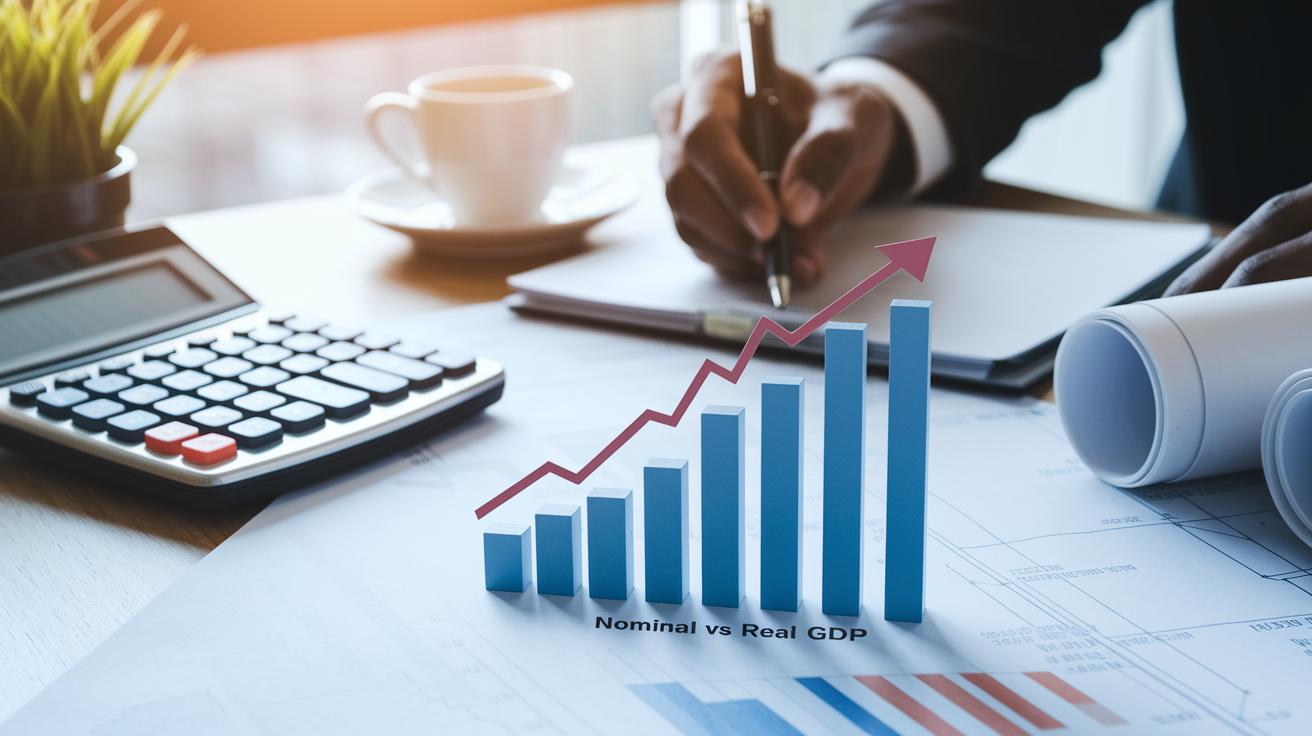
Economists keep track of a country's growth with a simple method. They look at the total output of an economy and compare how it changes over time. Basically, you subtract the old output from the current output, divide by the old number, and then multiply by 100. This tells you if the economy made more or less than before. For example, when production steadily increases, it shows that the economic energy is moving upward.
We also break this down into two types: nominal and real GDP. Nominal GDP uses today’s prices to value everything produced, while real GDP adjusts these numbers for inflation using a tool called a deflator. This adjustment helps us see the real growth in production without the confusion of rising prices.
Another useful measure is per capita GDP, which divides the overall GDP by the population. This gives a glimpse into the average economic output per person and can help compare living standards between different countries. It’s like checking the quality of life in each household by looking at how much each person contributes to the economy.
Criticisms and Limitations of Relying on GDP Growth Metrics
GDP growth tells us how much more stuff a country makes, but it doesn’t capture everything that matters for our quality of life. It looks at the total output of goods and services, yet it skips over unpaid work and the simple pleasures of leisure. And it ignores the state of our environment. Sometimes, spending on things like military activities or questionable financial deals can push GDP up without really making life better.
- Exclusion of unpaid work and leisure
- Neglect of income distribution and inequality
- Failure to account for environmental degradation
- Inclusion of harmful or non-productive spending
These gaps show that while GDP is helpful for understanding overall economic activity, it doesn’t give us the full picture. Other measures, like the Gini index or median income, help us see how income is shared and how well people are really doing. Using a mix of indicators makes it easier to design policies that meet the true needs of our communities.
Final Words
In the action, we broke down GDP growth to show its role in measuring national wealth, boosting employment, lifting consumer spending, and expanding government revenues. Each section helped connect how rising output supports both domestic prosperity and the global economy.
This guide explains why is gdp growth important for making informed investment decisions. Tracking these key metrics guides us toward smarter financial moves and a stable, positive future.
FAQ
Why is GDP growth important in economics?
GDP growth indicates the rising capacity of a nation to produce goods and services. It signals overall economic health, fuels job creation, and can boost consumer spending and living standards.
What is GDP in economics and what is its major benefit?
GDP represents the total dollar value of all goods and services produced over a period. It provides a snapshot of economic strength, guiding policy decisions and serving as a benchmark for comparing national performance.
Why is GDP significant in the pharmaceutical industry?
GDP matters in the pharmaceutical industry because it reflects the broader economic conditions that affect investment, innovation, and market demand. A stronger economy can drive research funding and product development in healthcare.
Why might GDP not be a good measure of economic growth?
GDP may not fully capture economic wellbeing as it overlooks unpaid work, leisure, and environmental quality. It can also include spending on activities that don’t enhance overall welfare, missing nuances in income distribution.
Is a higher or lower GDP better?
A higher GDP is generally seen as favorable because it indicates more economic activity and stronger national output, while a lower GDP may suggest reduced production and potential challenges in economic performance.
What does it mean when GDP is low?
A low GDP points to a smaller total value of goods and services produced. This can indicate slower economic activity, reduced consumer spending, and possible challenges in employment and investment.