

Ever wondered what really sets our economy in motion? GDP growth tells us how a country steps up its production over time. Think of it like following a favorite recipe: you mix local resources, new factories, and a skilled workforce to create more jobs and higher incomes.
In this article, we break down the main ingredients behind GDP growth and show you how each one adds value. Stay with us as we explore the forces that keep our economic engine working every day.
Core Drivers Behind GDP Growth
GDP growth shows how much more an economy produces over time. When GDP goes up, it usually means more jobs, better pay, and an overall improvement in living standards. Think of it as tracking the extra value a country creates each year.
There are several key factors that help push GDP growth. Natural resources like oil, minerals, water, forests, and good farming land act as the building blocks for production. These resources are like the ingredients in your favorite recipe, they help boost a nation’s output. And then there’s physical capital: things like factories, machinery, and well-kept roads. For example, a new factory not only lowers manufacturing costs but also ups the supply of products to meet demand.
The labor force is another big driver. As more people join the workforce, production capacity grows. Low unemployment helps ensure that the available talent is put to good use. Plus, when there’s an investment in human capital through better education, training, or specialized skills in areas like science and technology, each worker can do even more.
Technological advances play their part too. They make production more efficient, which means that the same number of workers can produce more goods. On top of that, stable legal and regulatory systems give businesses the confidence to invest and expand.
In the short run, a boost in overall spending can lift GDP, while long-term growth depends on a country’s ability to increase production capacity. All these factors together create the robust economic pace that drives sustained GDP growth.
Physical Capital Formation and Infrastructure Investment
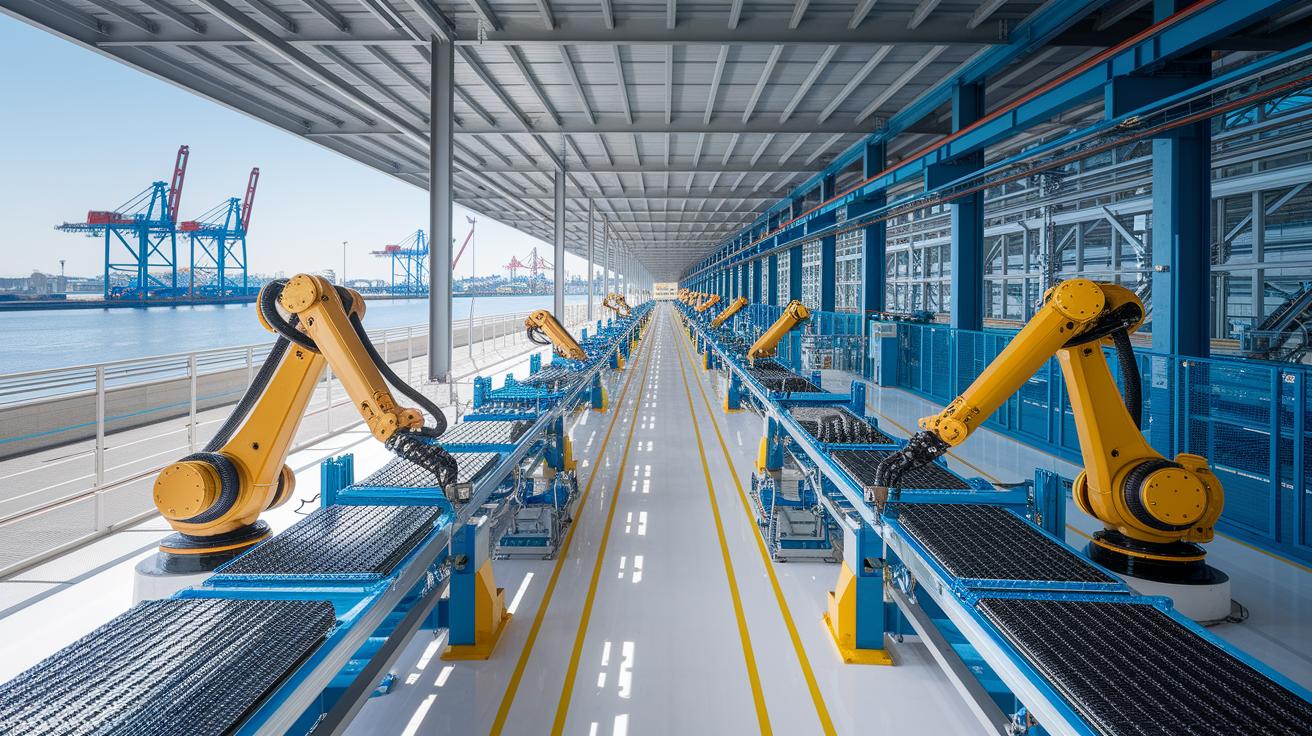
When businesses spend money on things like factories, machinery, and transport networks, they cut production costs and boost output. Upgrading equipment helps companies work faster and smoother. For example, installing an automated assembly line cuts down on mistakes, imagine a robot worker speeding up production just like a turbocharger pushes an engine to perform better.
Building and improving roads, ports, and energy grids also plays a big role in making everything run more efficiently. Picture a smooth, well-kept highway that speeds up deliveries and cuts down on expenses. These upgrades not only help businesses sell products at home but also create new chances to export goods to other countries.
History shows us that steady investments in physical assets and infrastructure help grow a country’s economy over time. When companies and governments put money into better facilities, it creates a cycle: improved productions lead to more profits, which then fund further investments. These smart investments form the backbone of an economy, inspiring growth and supporting long-term success.
Keeping physical assets up-to-date and developing infrastructure gives an economy the steady push it needs to expand and become more productive over time.
Impact of Labor Force Dynamics and Human Capital Development
New ways of working are giving our economy a boost. Even though having more workers remains key, different areas are coming up with their own creative ideas. For example, some regions now offer online courses and quick, focused lessons that help people learn fresh skills at their own pace.
Local training programs are changing the game. Digital classrooms and partnerships between the public and private sectors are breathing new life into communities. Imagine a neighborhood center filled with interactive tech lessons, each session injecting energy into the local economy. These fresh projects show how tailored skill development can lift productivity in specific areas.
Key factors include:
- Regional training projects that use tech-based education methods
- Online learning that can quickly adjust to what the market needs
- Collaboration between local industries and education hubs to upgrade vital skills
All these changes give us new ways to think about our workforce, adding an extra layer to the ongoing conversation about what drives economic growth.
Technological Progress and Productivity Improvements

Technology gives companies a powerful boost, letting them do more with the same team. For example, imagine a factory that adds smart machines to its assembly line. Suddenly, each worker can handle more tasks and mistakes drop. Did you know that before automation, manufacturing took hours, and now it happens in just minutes thanks to digital tools?
Investing in research and development is like fueling an engine of progress. When money goes into R&D, it sparks breakthroughs that ripple across different industries. One innovation can ignite others, lifting productivity everywhere and creating a chain reaction of improvement.
Good news: the spread of technology isn’t just for high-tech areas. Even regions that were once behind can catch up by using proven methods and tools from advanced economies. This sharing of techniques helps smooth out economic differences and lifts overall national output.
These shifts in how things are made and work are key to steady GDP growth. With smarter tools and thoughtful investments, companies boost efficiency and output across the board. This shows that the right technology can redefine production and drive long-run economic strength.
Government Policies Shaping GDP Growth
Fiscal Policy Measures
When the government spends money on things like schools, highways, or health services, it sparks extra activity in our economy. This extra spending means more work for businesses and more money in our pockets. Tax cuts work similarly. They leave families with a little extra cash, which encourages them to spend on everyday needs and helps lift the economy. Public projects not only create jobs today but also build a stronger foundation for tomorrow by investing in our infrastructure and future productive capacity.
Monetary Policy Actions
Central banks play a big role by setting interest rates and controlling the supply of money. Lower interest rates make loans cheaper, which encourages families to buy homes or cars and businesses to start new projects. Imagine a business that finally decides to expand its operations because it can now borrow money at a lower cost. A steady, predictable monetary policy also helps keep prices stable, reducing the worry that might delay important investments. Together, these measures create a balanced boost that helps the economy grow in both the short and long term.
what causes gdp growth: Robust Economic Momentum
Trade and global investments help a country make more things. In places like Japan and China, selling more goods abroad pushes up national production. When a country sells products overseas, that extra trade helps boost its overall GDP growth.
Foreign investments matter a lot too. When companies from other countries invest in local industries, they often bring modern technology and new ways of working. This kind of investment can create jobs and make processes more efficient, setting the stage for long-lasting growth.
Currency exchange rates also play a role in a country’s economy. If these rates make a nation’s products cheaper for buyers overseas, exports become more attractive. And if imports become expensive, local producers get a push to create more goods, which can further raise GDP.
Global demand is another important factor. When other countries need more products, domestic companies get a chance to grow by meeting that need. For example, in the United States, strong demand at home and interest from international buyers both help fuel economic growth.
Trade liberalization, which means lowering barriers to trade, makes it easier for goods and services to move across borders. This smoother flow helps industries get the resources they need, keeping economic growth diverse, steady, and resilient.
Final Words
In the action, we covered key forces that shape GDP growth. We looked at how physical capital, labor quality, technology, government policies, and external influences come together to boost national output. Each section showed clear evidence of what causes gdp growth with a mix of smart investments, effective policy moves, and gradual technology shifts. The insights shared make it easier to connect the dots. Keep this understanding in mind and move forward with confidence knowing that a strong economy builds from many well-coordinated parts.
FAQ
Q: What causes GDP growth in economics, and what causes GDP growth in the United States?
A: GDP growth happens when an economy invests in physical capital, improves labor skills, adopts new technologies, and benefits from supportive government policies. These factors work together to boost a nation’s output.
Q: What causes GDP to increase and what are the factors of GDP growth?
A: GDP increases when there are improvements in infrastructure, education, and technological advancements. These changes help lower production costs and raise overall output in an economy.
Q: What are the four factors of economic growth?
A: The four main factors include natural resources, physical capital, the labor force along with human capital, and technological progress. Each factor contributes to raising a country’s production and income levels.
Q: What are the three main causes of economic growth?
A: Economic growth is mainly driven by investments in capital, advances in technology, and improved labor productivity. These causes work together to enhance the production of goods and services.
Q: What is economic growth?
A: Economic growth is defined as the rise in the value of goods and services produced over time, which generally leads to higher employment and increased national income.
Q: Why is economic growth important, and what benefits does it bring?
A: Economic growth is important because it raises living standards, creates jobs, and provides more resources for public investments. These benefits ultimately improve quality of life across a society.
Q: What does “GDP growth PDF” refer to?
A: A “GDP growth PDF” typically contains a detailed document explaining the ideas and data behind GDP growth, covering aspects like capital formation, labor, technology, and related government policies.