

Have you ever wondered if the market’s ups and downs might be giving you a hidden hint? Small price changes can sometimes point to bigger moves ahead.
In this post, we chat about how keeping an eye on these shifts can help you adjust your strategy and spot smart opportunities. We sift through the market’s chatter to show you that even a tiny fluctuation can hold meaning.
Ready to see market volatility in a whole new way?
Foundations for Analyzing Market Volatility Trends
Market volatility means how much asset prices jump around over time. Tracking these price changes is a bit like following clues on a map. Little rises and falls aren’t just random; they can hint at big changes coming up. For example, small wobbles might show that a big upswing is just around the corner.
Keeping a close eye on how the market moves can help you make smarter financial choices. It’s about tuning into the market’s heartbeat by watching the mood and spotting clear trends. When prices change, they give you a peek into the market’s feelings and possible risks. By cutting through the background noise, you can spot key patterns that might otherwise go unnoticed.
Key factors to look at include:
| What to Watch | Why It Matters |
|---|---|
| Asset Price Changes | They show how volatile the market is |
| Directional Trends | They help you see which way prices are moving |
| Uncertainty Levels | They offer clues about risk and potential gains |
Mixing technical checks with a feel for the market’s vibe lets you shape strategies that work with these ups and downs. Every price move invites you to look closer and fine-tune your plan, proving that volatility can be a stepping stone to smart gains.
Statistical Models for Quantitative Volatility Analysis

Getting a grip on market jitters is key for making smart choices. We start by turning raw price swings into clear signals using a variance analysis method, which shows how much prices spread out over time. This method helps us change what seems like random noise into measurable risk. We team up this analysis with a way to handle natural market randomness, a process called stochastic volatility estimation (basically, a method to factor in everyday market ups and downs).
We use simple tools like symbol lookup and point and figure charts to set up a three-step plan. First, we gather market data and make sense of price patterns. Next, we use statistical checks to translate these patterns into tangible risk numbers. Finally, we run a detailed risk check to find key points where market moves might hint at future gains or losses.
Then there’s our Smart Trend Control system, which brings everything together by looking at both stock and crypto data. It keeps the analysis fresh by updating risk numbers with the latest market moves, so investors can tweak their portfolios almost in real-time. Think of it like comparing yesterday’s weather with today’s forecast, you see how past price swings stack up against current trends.
Historical data shows that small price wobbles often foreshadow larger market adjustments, offering a chance to capture early gains. This layered method turns tricky market moves into a clear, step-by-step signal that guides smarter financial decisions.
Data-Driven Historical Trend Evaluations
When we examine past price movements together with clear models, hidden market strains and slight price shifts come to light. For instance, if you take a closer look at the S&P 500, its big swings can sometimes hide smaller changes that indicate stress. Analysts study these numbers and patterns, noticing cycles that often come right before significant market shifts. Imagine this: before anyone noticed clear signs of trouble, the S&P 500 was quietly showing minor fluctuations that hinted at deeper vulnerabilities.
Looking at the NIFTY index tells a similar story. By measuring its small ups and downs, experts can spot little dips that follow familiar patterns. These subtle signals, when paired with historical evaluations, can give early warnings about risks that might be building up.
| Index | Key Observation |
|---|---|
| S&P 500 | Big swings hide tiny fluctuations that may hint at stress |
| NIFTY | Small dips and breaks signal underlying issues |
Technical Chart Analysis for Volatility Signal Interpretation
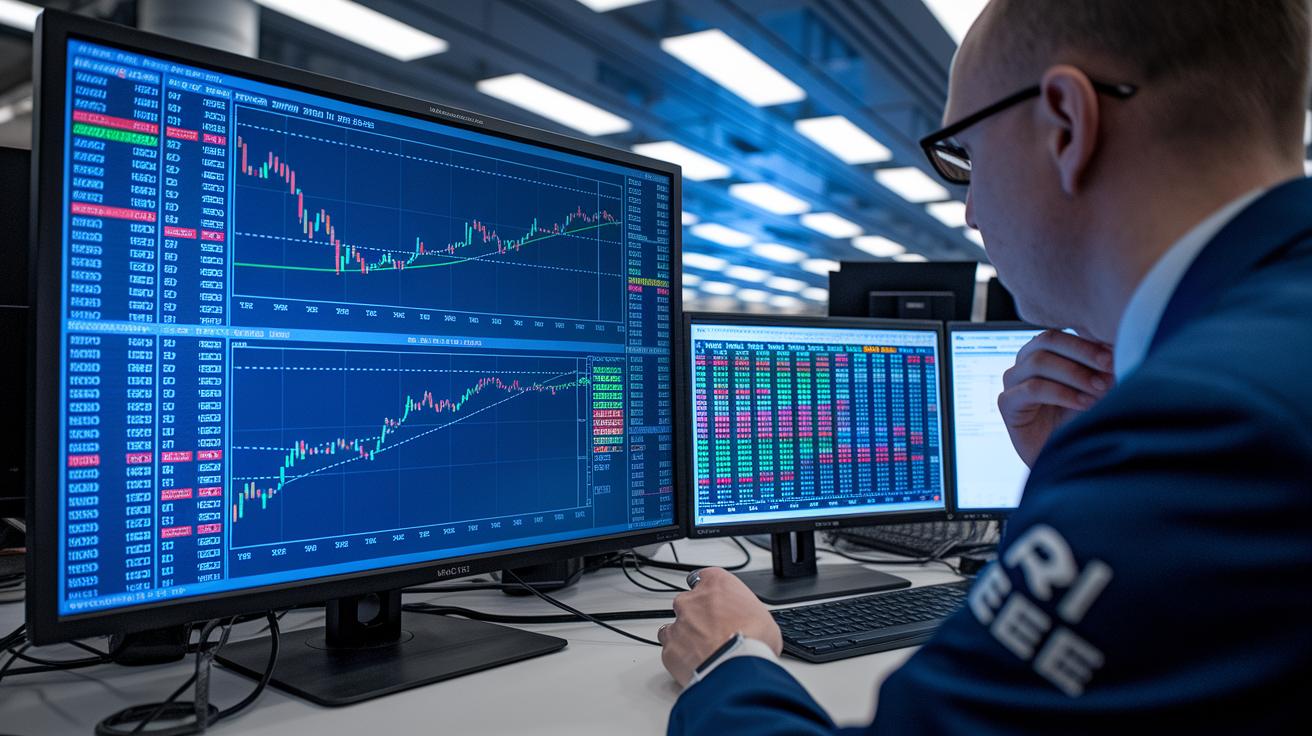
Technical chart analysis turns raw numbers into useful clues. Think of it as reading a secret message left by the market. For example, the VIX, which measures market fear, works like a little warning light. When it goes up, investors are quietly preparing for some sharp movements, kind of like checking your speed on a road trip.
Point & figure charts are another great tool. Imagine drawing simple boxes that only record important price changes. These charts help you see clear patterns in price momentum that can easily be missed on traditional charts. It’s like uncovering a hidden trail that guides traders to crucial shifts.
Moving average bands act like friendly boundary markers. When prices break above or below these lines, it could be a sign that a volatility spike is on its way. Picture a safety net: if prices wander too far, it’s a signal to keep a close eye on things.
Momentum oscillators, such as the RSI (Relative Strength Index, a tool that shows how fast prices are changing), add an extra layer of insight. They tell you when the market might be overbought or oversold. Before a big rally, stocks can dip temporarily, almost like taking a deep breath before a sprint. It’s a neat way the market resets itself.
Sector ETF trend signals, found in assets like wheat and soybeans, also play a role. These charts often hint at shifts in market mood before the broader indexes catch on, giving a sneak peek into potential regime changes.
| Tool | Signal |
|---|---|
| VIX | Market fear and potential spikes |
| Point & Figure Charts | Clear price momentum patterns |
| Moving Average Bands | Boundaries indicating volatility shifts |
| Momentum Oscillators | Overbought or oversold conditions |
Dynamic Volatility Forecasting Techniques
Imagine checking your phone for sudden weather changes. In the same way, market forecasting works like a digital weather app that alerts you when unexpected shifts happen. It treats forecast error margins like a car’s speedometer that instantly adjusts when there's a small bump in crypto volatility.
Our smart algorithms pick up tiny shifts with every tick. Think of it like feeling a slight drop in air pressure before a shower. For example, consider this surprising fact: "Before diving into finance, even seasoned experts sometimes missed subtle signs until their strategies caught up with the market shift."
This method cuts out unnecessary details. Instead, it uses clear digital comparisons to help investors understand and quickly react to changing market conditions.
Asset Risk Analysis and Volatility-Based Risk Management

Investors can turn wild market swings into smart chances by taking a close look at asset risks and making tweaks that balance gains with possible losses. When you make changes to your portfolio, it’s a perfect moment to check your risk numbers. For example, figuring out Value-at-Risk (a method that estimates the worst loss you might face) is like checking your tire pressure before a long drive.
Mixing up your investments by adding assets outside of public markets can boost your safety. Instead of putting all your eggs in one basket, you can add items such as real estate and private instruments. This approach makes it less likely that a sudden market change will hurt your overall investments.
It helps to review your portfolio regularly, say every quarter, to fine-tune your risk strategies. Working with an advisor is handy, too, as you get expert advice. One investor noted how matching risk measures with a trusted advisor helped him shift his plan swiftly before a market drop hit. That kind of insight can be key in ensuring that you make the right risk-adjusted moves.
| Risk Metric | Benefit |
|---|---|
| Value-at-Risk | Shows potential losses |
| Risk-Adjusted Return | Keeps profit and risk in balance |
Taking a flexible look at how you spread your investments can help turn scary market ups and downs into steady, smart gains.
Cross-Market Volatility Case Studies
When you look at different kinds of investments, you often see that price ups and downs can give you clues about both risk and opportunity. For example, trends in agriculture ETFs, like those for wheat and soybeans, can show shifts in market mood. When these prices jump suddenly, it's a sign that investors are reacting strongly to outside economic surprises.
Crypto markets, on the other hand, have their own way of acting. One day, you might see a big surge in crypto values, and the next day, everything can settle down pretty quickly. This kind of behavior means risk managers have to rethink their plans very rapidly. Meanwhile, even bond markets tell a story. If bond yields start moving in unexpected ways, it tells you that economic shocks are already unsettling more traditional investments.
John Murphy's approach to looking at trends reminds us to keep an eye on patterns across different market sectors. His ideas show that the same kind of stress affecting agriculture might make investors act very differently in crypto or bonds. Research into market turbulence helps us figure out these differences more clearly.
Key points to remember:
- Worries in commodity markets might hint at bigger economic strains.
- Sudden changes in crypto values need fast adjustments in risk planning.
- Unusual moves in bond markets often point to changes in investor feelings.
Looking at these case studies together gives us a clearer picture of how reviewing risks across different markets can lead to useful, real-world insights.
Final Words
In the action, this article explored how investors can transform market fluctuations into strategic insights. We touched on defining volatility, using statistical models, and deciphering chart signals to navigate daily shifts in stock prices. Our approach highlighted dynamic forecasting and asset risk evaluations while grounding results in historical trend evaluations and cross-market comparisons. Embracing these methods gives confidence when analyzing market volatility trends, showing that well-informed strategies can turn market changes into growth chances. Keep a clear view, and remain curious about each market pulse.
FAQ
What does volatility mean?
The term “volatility” means how much an asset’s price changes over time. It shows how quickly prices might shift, helping investors assess uncertainty and decide when to act.
What are the best volatility indicators and how do they work?
The best volatility indicators combine various tools such as TradingView’s options, the VIX, and moving average bands. They track price changes and help traders spot patterns for intraday and broader market trading decisions.
How does stock market volatility today reflect market conditions?
The stock market volatility today represents current market mood by measuring rapid price swings. It signals levels of uncertainty and may highlight emerging trends that investors should consider when planning strategies.
What are volatility index signals on Telegram used for?
The volatility index signals on Telegram offer real-time alerts based on index movements. They help investors stay updated on sudden shifts and evolving trends, empowering swift and informed decision-making.